Linocut
General information
Linocut, which began sprouting in the early 1900s, is the art of carving a piece of linoleum (blend of linseed oil, pine resin, cork dust, limestone etc.) which was originally used as a flooring material, to finally produce a piece of work through the technique of relief printing. Other names it comes by inlcude lino printing and linoleum block print.
To produce a piece of linocut, these are the steps:
- Everything begins with the drawing of the synthesis you want to carve. ( I do mine by pencil sketching)
- Then transfer the synthesis on the linoleum (I use tracing paper made from rice along with carbon paper)
- Then rolling ink on the carved surface (I use oil based but water washed inks)
- Align and cover the work with paper (I do this by hand)
- Apply pressure to produce the final print (I use a table spoon)
- Extra step to be creative (like using glitter on the wet ink)
- Finally wait for the ink to dry (at least 7 days, depending on the weather and ink volume)
Some of my Works
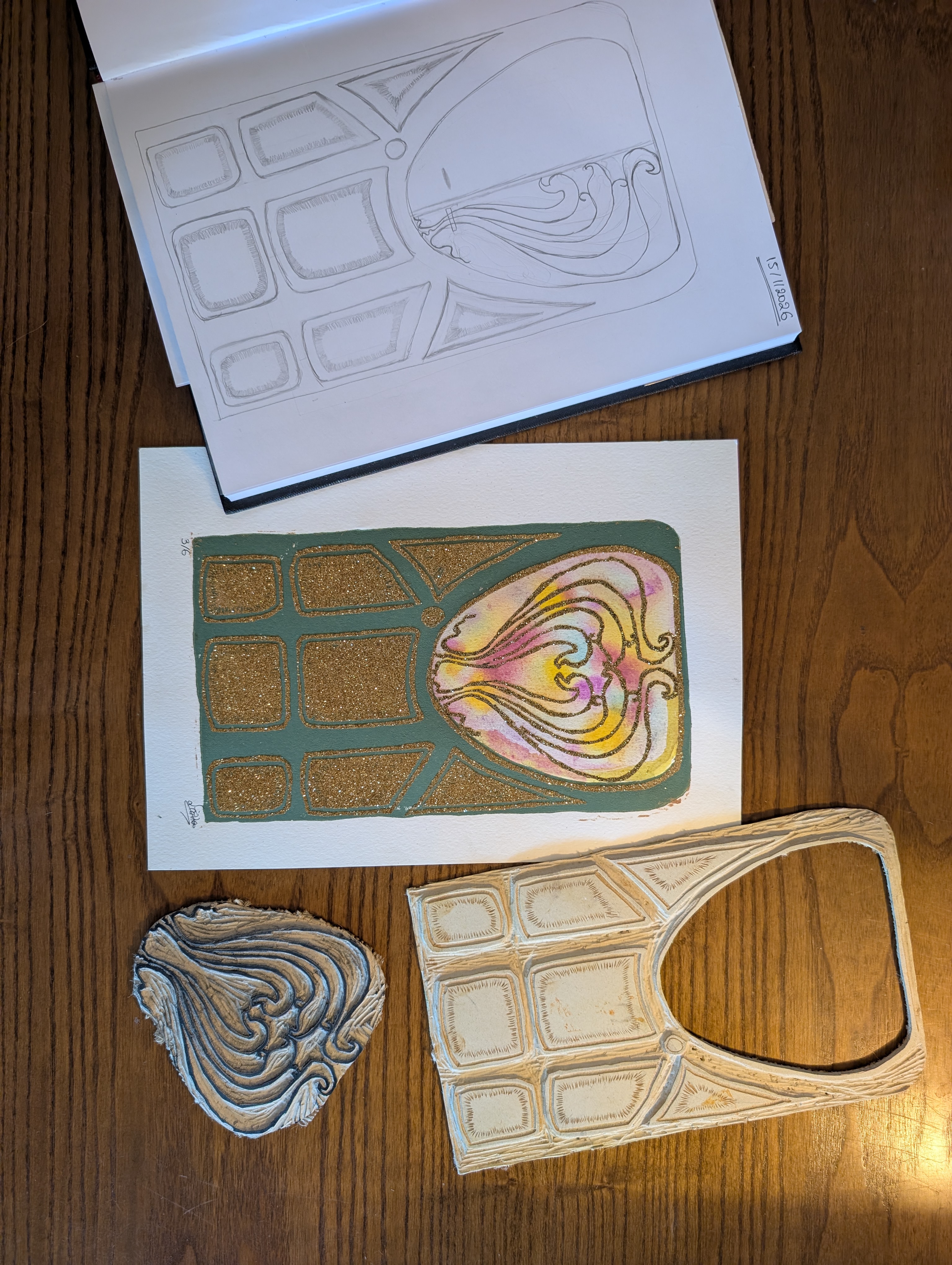
Art Nouveau door
This work is inspired by my recent fascination with Art Nouveau style doors. The print was created using the reduction technique, where a single block of linoleum is progressively carved and printed in successive layers, making each stage of the process irreversible and resulting in a unique final composition. The stained glass section and metallic details were carved as a separate piece using the jigsaw technique, allowing them to be printed independently. Watercolor was then used to evoke the luminous colors and delicate transparency of stained glass.
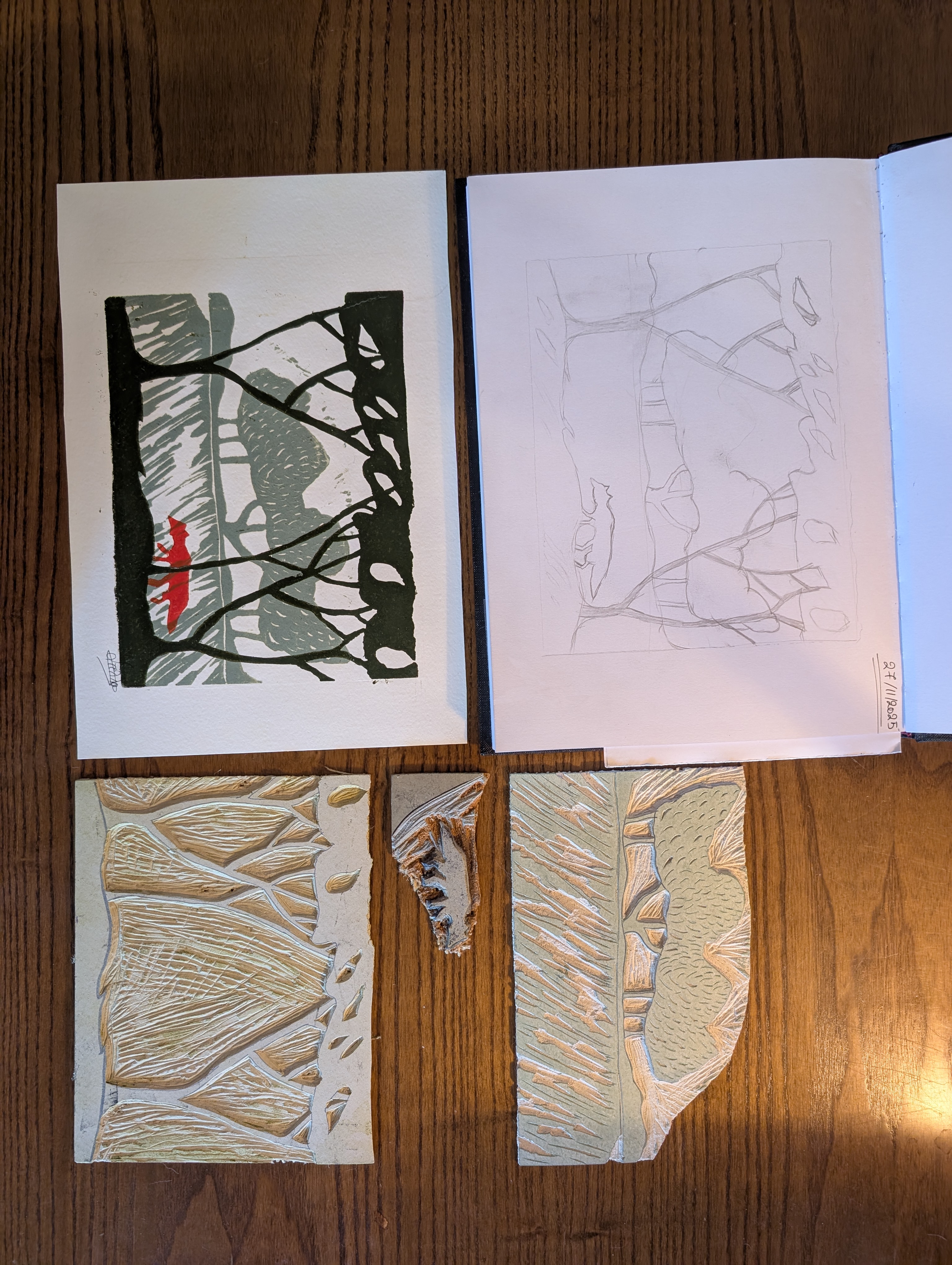
Fox in the woods
This three layered work was inspired by a photo that I found on Pinterest but I haven’t been able to identify the original artist (if you happen to recognize it, I’d be grateful if you let me know). The print was created using three separate linoleum blocks, with each layer carved and printed independently from background to foreground.
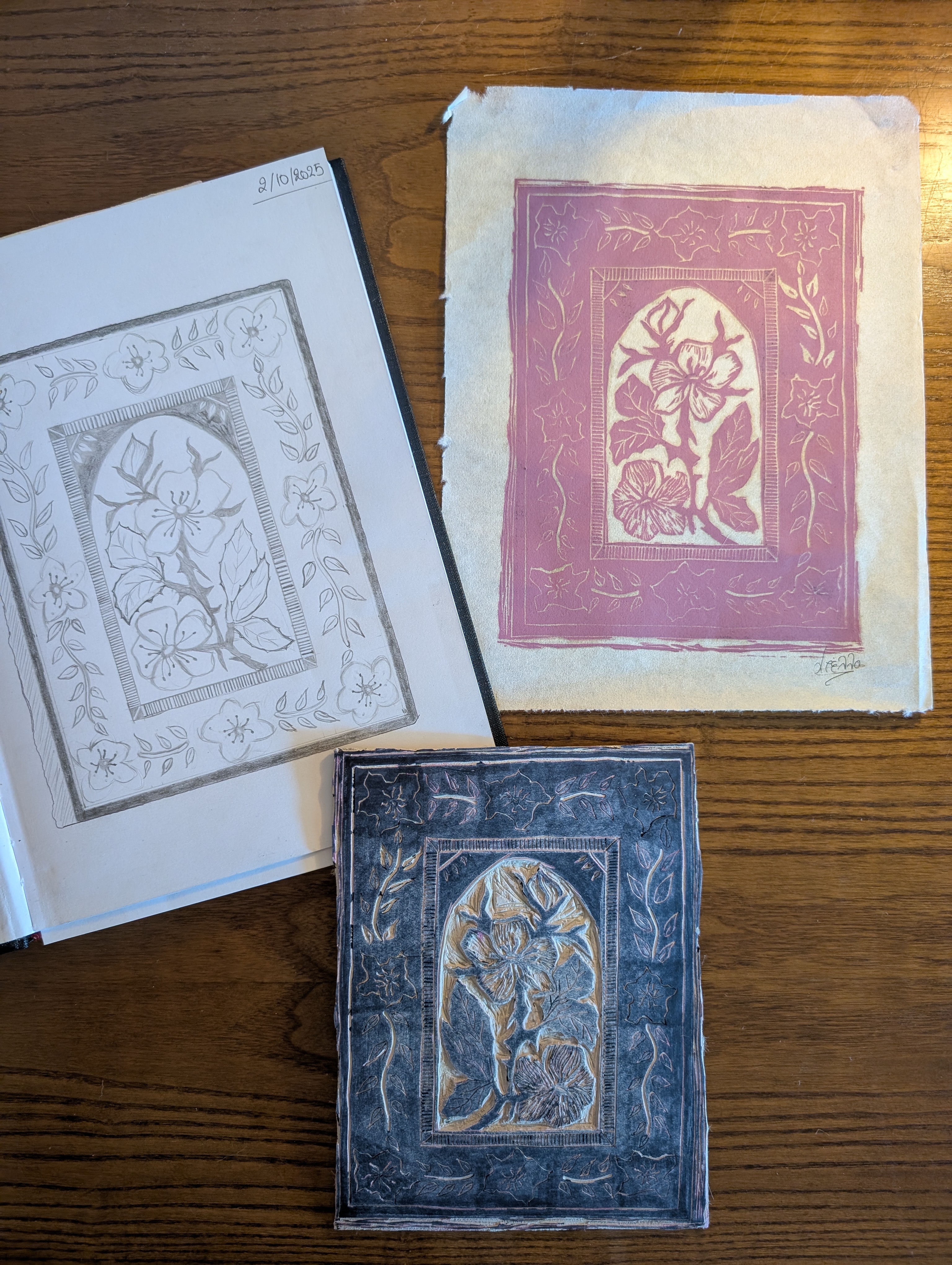
Rosa canina (aka Dog Rose)
This work was inspired by the beautiful botanical linocuts of Grace Edkins Studio. It was one of the first pieces I created and was printed on handmade Japanese paper ( gifted to me by a friend). A fun fact is that I chose a magenta ink for the print before I even knew the flower’s name, or that pink is its characteristic color.
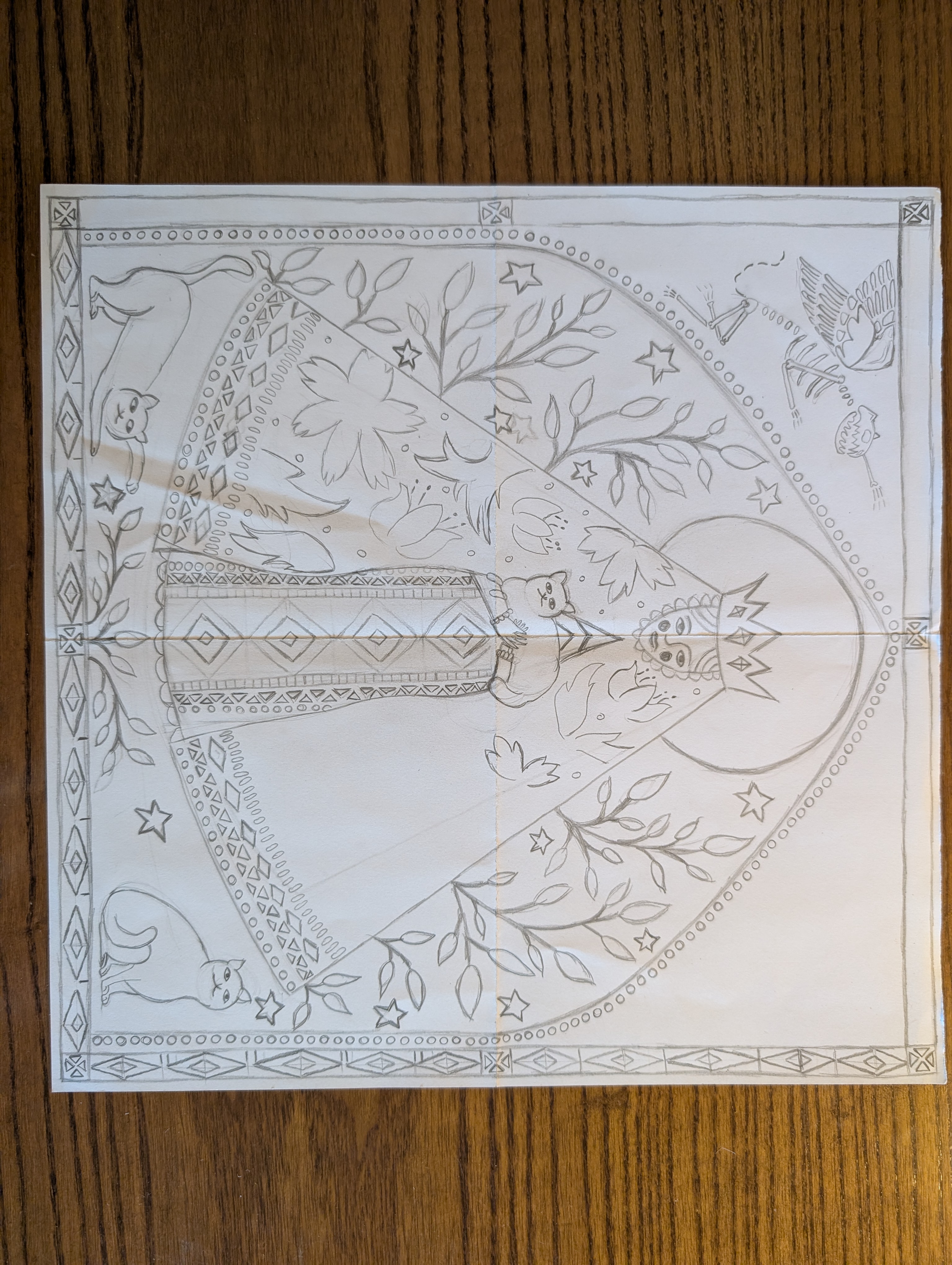
Gertrude of Nivelles
This is my latest still in progress work inspired by New Zealand artist Jessica Benhar. After a year of carving linoleum, I wanted to challenge myself with something more ambitious. This piece is much more detailed than my previous works and is being sketched on A3 paper, making it my largest linocut so far. As someone who enjoys symmetry a little too much, in some troublesome cases, I sketch one side of the design and mirror it with transfer paper, ensuring that the delicate or geometric elements remain perfectly balanced.